OPTIMESS激光测量仪在木材行业的应用
MM现代制造
2010-08-05

The laser sensor for all areas of the wood industry
- sturdy construction
- regulated laser diode
- interference immunity with regard to extraneous light
- high measuring frequency
- on-line thickness measuring
- board measurement
-
profile measuring
For all areas, where wider measuring ranges are necessary (e.g. for veneer peeling machines) the OPTImess Standard series is available with measuring areas of up to 1000 mm.
Thickness Measuring Thickness Measuring The main area of operation for laser sensors in the wood industry is thickness measuring. Thickness measuring in the form of an one-track system is possible with one as well as with two sensors. Measuring with one sensor is carried out on a reference cylinder as a basis. In this connection, the fact that the cylinder抯 ovality as well as any lifting of the product from the cylinder will be registered as a change of thickness and can lead to measuring errors needs to be taken into consideration. Therefore, the standard use of two laser sensors per measuring track is recommended, whereby one sensor each is positioned above and below the product. This arrangement allows for a vertical movement of the product within the measuring range, which will have no influence on the measuring result. Depending on the sensors?arrangement and number, there is thus a possibility of different system configurations · stationary thickness measuring of 1 to x tracks · thickness measuring with adjustable measuring tracks · traversing thickness measuring For stationary thickness measuring there are specialised data processing units or system solutions with PC available. For traversing measuring different traversing frames in the shape of c-frames or o-frames with different widths are used. The traversing process facilitates the continuous scanning of longitudinal and cross profiles, and, additionally, width measuring in case of static product edges. Traversing errors due to production tolerances and the rail抯 deflexion caused by its own weight are compensated for by a corresponding traversing-error correction in the software. Profile Measuring Depending on the board抯 length, several sensors are scanning the profile of the board, which is passing crosswise below the sensor. During the subsequent data processing, the width of the edges to be cut off and the sawing width are detected from the resulting data. Tree-Trunk Measurement at Veneer Peeling Plants The rotating tree-trunk, which has been clamped into the peeling machine, is measured with several stationary sensors or a traversing system. The registered measured values are processed with a special software. According to the measured values, the tree-trunk receptors are adjusted in such a way, that optimal veneer peeling is achieved. Controlling of Wood Grinders To guarantee the wood grinder抯 correct setting, e.g. when polishing doors, a fast measuring with laser sensors is used. The wood grinder is controlled on the basis of the detected door width. The OPTImess sensors in operation for this purpose are working on raw wood as well as on colour finished surfaces. Width Measuring For continuous width measuring the OPTIline system is available. This system operates according to the shadow measuring method and carries out on-line width measuring on the basis of edge detection of the product.热点文章
-

皮尔磁:标准升级,守护工业燃烧安全
2026-05-22
-
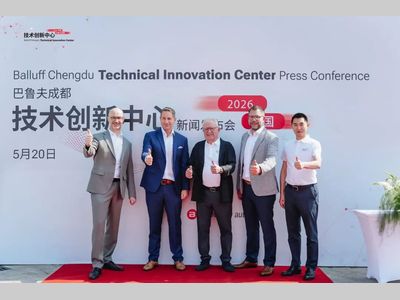
深耕中国 创新赋能——巴鲁夫成都技术创新中心盛大启幕
2026-05-22
-

聚焦绿色制造与数据中心 丹佛斯传动双场景能效方案亮相绿色工厂厂务大会
2026-05-22
-

皮尔磁:锚定VDMA新规,深耕氢能安全可持续发展
2026-05-22
-
皮尔磁:工业安全门的“智能管家”
2026-05-22
-
-

ABB与易来签署战略合作,加速布局智能家居市场
2026-05-26
-

解锁AI落地深水区:红帽开源生态赋能企业数字化跃迁 ——2025红帽论坛重磅发布车用OS
10月31日,以 “解锁・下一步” 为主题的2025红帽论坛暨媒体沟通会在北京JW万豪酒店盛大召开。红帽通过核心主旨演讲、重磅新品发布、权威报告解读及高层对话,全方位展现了其以开源技术破解行业痛点、引领企业数字化转型的实力与愿景,为 AI 时代的企业创新注入强劲动力。
作者:
-
敏捷创新 “中国加速2.0”
-
赋心智 启新程 | 访埃夫特董事长兼总经理游玮博士
-
【MM时光机】2024年度精彩瞬间大盘点 杂志篇
-
施耐德电气亮相CeMAT ASIA 为智能物流多维赋能
-
探索智能未来的下一步 ——第12届中国硬科技产业链创新趋势峰会暨百家媒体论坛成功举办







评论
加载更多